Understand the current sports courts market
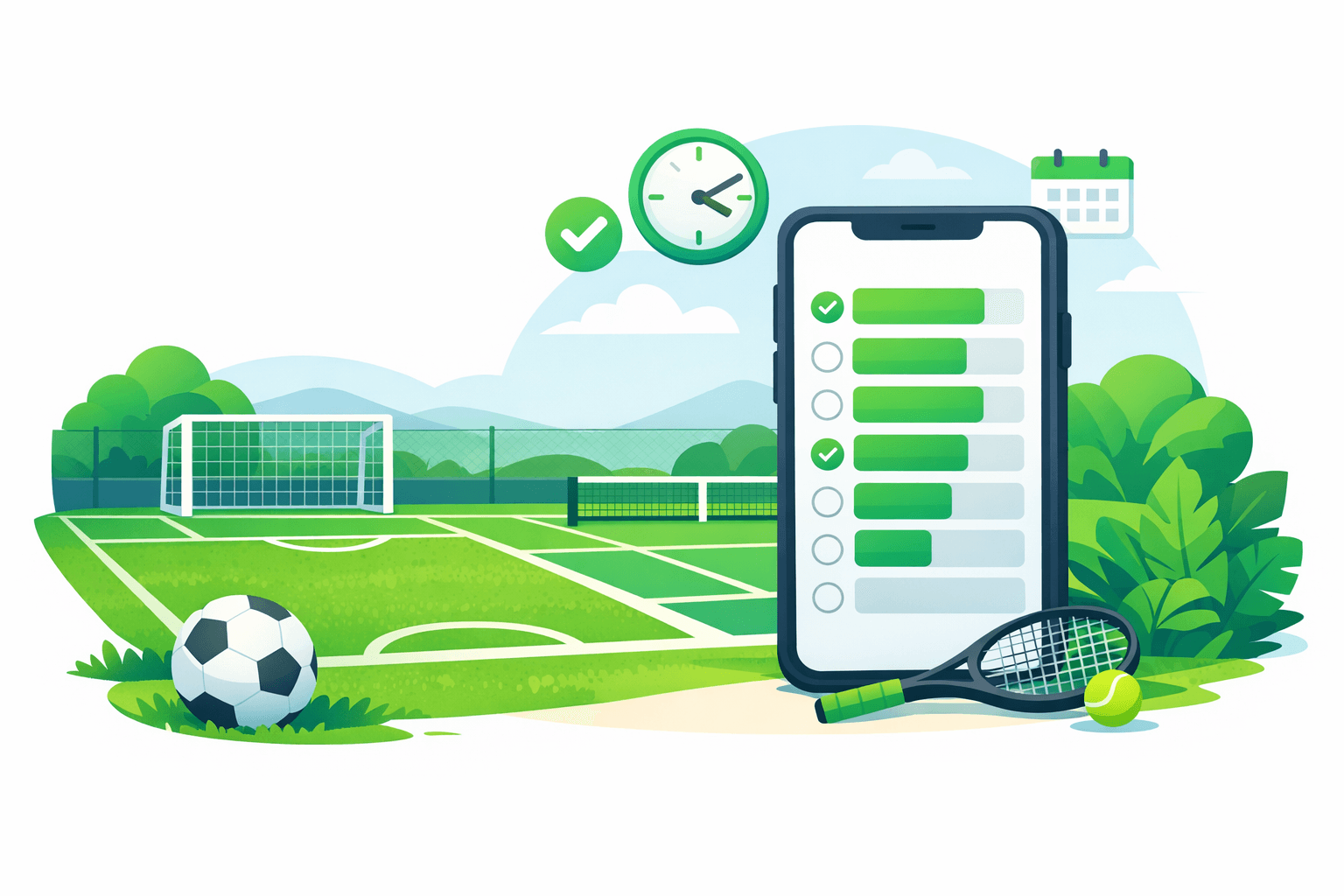
Before designing your app, it’s essential to map out the ecosystem: from public and private courts to sports clubs and gyms with sports facilities. In 2026, the demand for fast, contactless court booking continues to grow, but so does the competition with generalist apps and multi-booking platforms.
Define a clear and differentiated value proposition
To stand out with your own branded app, just allowing court reservations isn’t enough. Consider including:
- End-to-end management: from booking to payment, with instant confirmations and automatic reminders.
- Integration with calendars and personalized notifications.
- Loyalty systems for frequent users to gain rewards.
- Detailed court information: surface type, lighting, dimensions, accessibility.
Personalization and ease of use will be key to attract both amateur players and organized teams.
Optimize operations with digital tools
An effective app should simplify court administration for operators:
- Management dashboard to update availability in real time.
- Control over payments and cancellations with transparent records.
- Reports on usage, revenue, and user behavior.
This not only reduces human error but also allows scaling operations without losing control.
Strategies to attract and retain users in 2026
Launching is just the start. To grow your active user base:
- Design segmented social media campaigns targeting local sports communities.
- Use digital incentives and promotions for first-time bookings.
- Request and showcase reviews to build trust.
- Enable social interaction within the app, for instance allowing group or team creation.
Conclusion
Launching a branded sports courts app today is a great opportunity if you combine technology with agile operations and a clear value proposition. Focus on resolving specific frictions in booking and managing sports spaces, and support your launch with digital strategies aimed at the local sports community to ensure sustainable growth.